

Service area: Fort Worth, Arlington, Keller, and Saginaw, Texas
As spring cooling season begins in North Texas, many homeowners are surprised to find ice on their AC system just as the weather starts warming up. It seems backward at first. If the unit is supposed to cool the house, why would part of it freeze? The answer is that ice on an air conditioner is usually a warning sign, not a sign that the system is working extra well. For homeowners dealing with this issue, understanding the cause early can help prevent a bigger problem later and reduce the chance that spring turns into a summer breakdown. If you need air conditioning repair, a frozen AC is one of the clearest signs that something is not right.
This is a common concern for homeowners in Fort Worth, Grapevine, and Colleyville. Spring often brings the first stretch of regular AC use after a milder season, and that is when hidden airflow or cooling issues can start showing up. If you notice ice on the indoor coil, outdoor line, or other parts of the system, the best move is to treat it as a sign that the system needs attention, not as something to ignore.
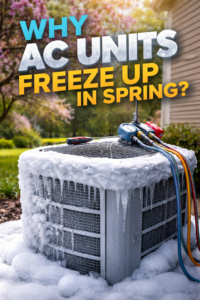
Why an AC Unit Freezes Up in Spring
An AC freezes when the system gets too cold in the wrong places, usually because airflow is restricted or the system is not operating correctly. Air conditioners depend on a balance of airflow and cooling performance. When that balance is off, moisture can freeze on the coil and create ice buildup.
The key point is this: an AC should cool your home, but it should not create visible ice. Ice means the system is struggling.
Spring is a common time for this problem to show up because homeowners begin running the AC more regularly, but the system may still have issues that built up over time. A filter may be clogged. Vents may be blocked. Airflow may be weak. In some cases, a deeper performance issue may be developing and only becomes obvious once cooling season starts again.
The Most Common Causes of a Frozen AC
There is not one single reason every AC freezes, but a few common causes show up again and again.
Dirty air filter
A dirty filter is one of the most common reasons an AC begins freezing up. When the filter is clogged, less air can move through the system. That reduced airflow can contribute to the coil getting too cold, which allows ice to form.
This is also one of the easiest things for homeowners to check. If the filter looks dirty, replacing it is a smart first step.
Blocked vents or closed registers
Your AC depends on steady airflow through the home. If too many vents are blocked by furniture, rugs, or closed registers, airflow can drop enough to create performance problems. Homeowners sometimes close vents in unused rooms thinking it will help save money, but it can interfere with how the system is designed to operate.
Blower or airflow problems
If the system is not moving air the way it should, freezing can happen even with a clean filter and open vents. That may point to a blower-related issue or another airflow problem inside the system. These are not things most homeowners should try to diagnose on their own, but they are a common reason the unit may ice over.
Refrigerant-related performance issues
Another possible cause is a refrigerant-related issue that affects how the system cools. Homeowners do not need to know the technical details to understand the main point: if the system has a cooling problem beyond simple airflow restriction, ice can begin forming and the unit may stop cooling effectively.
Continuing to run the system when something is already wrong
Once the system starts freezing, continuing to run it can make the problem worse. Some homeowners lower the thermostat further when the house is not cooling, hoping the system will catch up. But if there is already a problem, that extra demand can add to the freeze-up rather than solve it.
What Homeowners Should Check First
A frozen AC does not mean you need to take the system apart. But there are a few safe first steps you can take before scheduling service.
Turn the system off
If you see ice on the unit, turn the system off at the thermostat. Continuing to operate it can add to the buildup and make it harder for the system to recover.
Check the filter
Pull the filter and inspect it. If it is clearly dirty, replace it. This is one of the simplest and most important checks a homeowner can make when trying to fix my ac problems caused by poor airflow.
Make sure vents are open and unobstructed
Walk through the home and make sure supply and return vents are not blocked by furniture, rugs, or closed doors in a way that limits airflow. Open closed registers and remove obvious obstructions.
Let the system thaw
Before a technician can fully evaluate a frozen system, the ice needs to melt. That means giving the unit time to thaw after it has been shut off. Depending on how much ice has built up, this may take a while.
Do not keep testing it over and over
If ice is visible, resist the urge to keep turning the system back on just to see if it starts cooling again. That can restart the freeze-up and make the issue harder to diagnose.
Air Conditioning Repair in Fort Worth: Why Early Action Matters
For homeowners in Fort Worth, Grapevine, and Colleyville, spring is the best time to deal with freeze-up issues before the hottest weather arrives. Once summer gets going in North Texas, the AC is no longer optional. It becomes a daily need.
A system that is already freezing up in spring may be telling you it is not ready for the demands of summer. Waiting can turn a manageable service call into a bigger cooling problem during a much hotter part of the year. That is why addressing ac repair concerns early matters.
It also matters because frozen systems often cool poorly even before they stop working altogether. A homeowner may first notice weaker airflow, uneven cooling, or longer run times before the ice becomes obvious. If those warning signs are ignored, the problem can get worse.
When to Call a Professional
Some simple checks are reasonable, but many frozen AC issues need professional attention. If the system freezes again after you replace the filter and open the vents, that is a strong sign the issue goes beyond basic airflow maintenance.
Call for service if:
-
Ice returns after the system thaws
-
The filter was changed but cooling still feels weak
-
The home is not cooling evenly
-
The unit runs but does not keep up
-
You hear unusual noises
-
Water appears around the system after thawing
-
The problem keeps happening
These are signs that air conditioning repair or central air repair may be needed. A technician can inspect the system, identify whether the cause is airflow-related, refrigerant-related, or something else, and help keep the problem from returning.
Safety matters
Homeowners should not try to open sealed system components or handle refrigerant-related issues themselves. If the problem goes beyond filter checks and open vents, the safest and most effective next step is professional service.
Do Not Ignore a Frozen AC
A frozen coil is not something to brush off and hope resolves on its own. It is one of the clearest signs that your AC is not operating the way it should. The good news is that early action can often prevent added strain and help keep a spring problem from becoming a summer emergency.
If you live in Fort Worth, Grapevine, or Colleyville and your AC is freezing up, the best move is to shut it off, check the filter, make sure vents are open, and let the system thaw. Then get the issue properly evaluated before hot weather puts even more demand on the unit. If you need air conditioning repair, Lawrence HVAC can help. Schedule service or request an appointment before the problem gets worse.
Suggested URL Slug
/why-ac-units-freeze-up-in-spring-fort-worth
3 Suggested Internal Link Anchor Text Ideas
-
Schedule AC repair in Fort Worth
-
Signs your central air system needs service
-
Spring HVAC maintenance for better airflow
5 FAQ Questions and Answers for Schema or Page Enhancement
1. Why is my AC freezing up in spring?
An AC usually freezes because airflow is restricted or the system is not cooling properly. Common causes include a dirty filter, blocked vents, airflow problems, or other performance issues.
2. Should I keep running my AC if I see ice on it?
No. If you see ice on your AC, turn the system off and let it thaw. Running it longer can make the freeze-up worse.
3. Can a dirty filter cause a frozen AC?
Yes. A clogged filter can reduce airflow enough to make the coil get too cold, which can lead to ice buildup.
4. What should I check before calling for service?
Check the air filter, make sure vents are open and unobstructed, and let the system thaw completely. If the problem returns, it is time to schedule professional service.
5. When do I need professional air conditioning repair for a frozen AC?
You should call for service if the system freezes again after thawing, cooling stays weak, the home is not getting comfortable, or the issue keeps happening.

