
Emergency AC Repair in Fort Worth: What to Do Before the Technician Arrives
Service area: Fort Worth, Arlington, Keller, and Saginaw, Texas
When your AC stops working in North Texas, the temperature inside your home can rise fast. What starts as a small comfort issue can quickly turn into a stressful situation, especially on a warm afternoon or evening. For homeowners dealing with emergency ac repair, knowing what to do in the first few minutes can help you stay safer, protect your system from added damage, and make things easier once help is on the way.
Many Fort Worth area homeowners are not sure what they should check and what they should leave alone. That is understandable. When the house is getting warmer and the system is not working right, the goal is not to troubleshoot every possible cause. The goal is to take a few safe, simple steps, avoid making the problem worse, and be ready when professional service arrives. For homeowners in Fort Worth, Arlington, and Bedford, that practical approach can make a big difference.
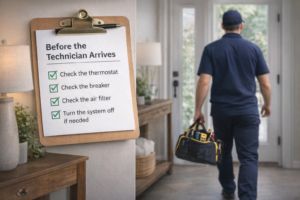
First Steps to Take Before the Technician Arrives
Once you have scheduled service, start with the basics. A few quick checks can help rule out a simple issue and can also give the technician a better idea of what is happening when they get there.
Check the thermostat
Make sure the thermostat is set to cool and that the temperature setting is below the current room temperature. Sometimes the issue is as simple as a setting change, a dead battery in the thermostat, or a thermostat that was bumped accidentally.
If the display is blank, that may point to a power issue or battery issue. If the thermostat seems responsive but the system is still not running correctly, move on to the next safe check.
Check the breaker
Look at your electrical panel to see whether the HVAC breaker has tripped. If it has, you can reset it once. If it trips again right away, stop there. Do not keep resetting it. Repeated tripping can be a sign of a larger electrical problem that should be handled by a professional.
Check the air filter
A very dirty filter can restrict airflow and sometimes cause the system to struggle or shut down. If the filter is clearly clogged and you have a replacement on hand, changing it is a reasonable step. If the filter was the problem, the system may begin operating more normally after replacement.
If changing the filter does not help, do not keep experimenting. At that point, it is better to wait for the technician.
When to Turn the System Off
Not every AC problem means the system should keep trying to run. In some cases, continuing to operate it can add strain or make damage worse.
Turn the system off if you notice:
-
Loud banging, grinding, or squealing sounds
-
A burning smell
-
Water pooling around the unit
-
Warm air blowing when the system is supposed to be cooling
-
Frequent starting and stopping
-
Any sign of electrical trouble
If the system is clearly not operating normally, shut it off at the thermostat and leave it off until the technician arrives. This is one of the most important steps homeowners can take during an emergency ac repair situation. Letting a struggling system continue running can increase wear and may turn a manageable repair into a more expensive one.
How to Keep the Home Cooler While You Wait
Once you have done the safe checks and shut the system down if needed, the next goal is to slow heat buildup indoors. This is especially important in Fort Worth area weather, where homes can warm up quickly once cooling stops.
Close blinds and curtains
Sunlight adds heat fast, especially in rooms with large windows. Closing blinds, curtains, or shades helps reduce solar heat gain and can keep indoor temperatures more manageable while you wait.
Keep doors closed
Try to keep exterior doors closed as much as possible. You can also close off unused rooms to help hold cooler air in the areas where your family is spending time.
Use fans safely
Ceiling fans and portable fans can help air feel more comfortable while you wait for hvac emergency service. Fans do not lower the actual room temperature, but they can help with comfort and air movement. Just make sure they are used safely and kept clear of water or damaged outlets.
Avoid extra heat indoors
Skip activities that add heat to the home if you can. Cooking with the oven, running the dryer, or using heat-producing appliances can make an uncomfortable situation worse.
Safety Steps Around the Equipment
If your AC is making unusual sounds, leaking, or showing signs of electrical trouble, keep family members away from the unit until the technician arrives.
Keep children and pets away
Outdoor condensers and indoor HVAC equipment should not be touched during a breakdown, especially if there are electrical concerns, loose panels, or odd sounds. Keep children and pets away from the area to reduce risk.
Do not open electrical compartments
It can be tempting to see if something looks loose or obvious, but deeper diagnosis should be left to a professional. Avoid removing covers, touching wires, or reaching into the equipment.
Clear a path for the technician
One of the most helpful things you can do is make access easier. Clear a path to both the indoor and outdoor unit. Move stored items, patio furniture, boxes, or anything else that may slow access. This helps the technician get started faster once they arrive.
Why Fast Action Matters in Fort Worth, Arlington, and Bedford
In Fort Worth, Arlington, and Bedford, losing AC is more than a minor inconvenience once temperatures start climbing. Indoor heat can build quickly, and a struggling system can worsen fast if it is left running when something is wrong.
A quick response matters for two reasons. First, it helps protect comfort and safety inside the home. Second, it can help reduce the chance of extra strain on the equipment. A system that is short cycling, leaking, or making unusual noises is often telling you it needs help. Ignoring those signs and hoping it clears up on its own is rarely the best move.
This is why many homeowners search for terms like ac repair near me or hour ac repair near me when a breakdown happens. They need practical help quickly, but they also need to know what to do during the gap between the call and the arrival. Taking calm, safe steps during that window can make the situation more manageable.
When It Is Truly an Emergency
Not every AC problem is the same. Some can wait for a standard appointment, while others need urgent attention.
Signs that point to emergency service include:
-
No cool air during hot weather
-
Burning or electrical smells
-
Loud or unusual mechanical noises
-
Water leakage around the unit
-
Repeated breaker trips
-
A complete system shutdown during extreme heat
-
Elderly family members, young children, or medically vulnerable people in the home
If the system stops cooling during a hot stretch and vulnerable people are in the home, that raises the urgency. The same is true if you notice signs of electrical trouble or strong burning odors. In those cases, emergency ac repair is the right step, and the system should remain off until it is professionally inspected.
Stay Calm and Let the Technician Handle the Rest
When your AC stops working, it is easy to feel pressure to fix it immediately. But the smartest move is usually a simple one. Check the thermostat, check the breaker, inspect the filter, and shut the system off if something clearly is not right. Then focus on keeping the home as cool and safe as possible while you wait.
For homeowners in Fort Worth, Arlington, and Bedford, fast action matters, but so does good judgment. Do not keep forcing a struggling system to run, and do not try to take apart equipment on your own. If you need emergency ac repair, Lawrence HVAC can help. Schedule service or request an appointment so your home can get the professional attention it needs before the heat gets worse.
5 FAQ Questions and Answers for Schema or Page Enhancement
1. What should I check before the AC technician arrives?
Start by checking the thermostat, the breaker, and the air filter. These are safe, simple steps that may reveal an obvious issue without opening the equipment.
2. Should I keep running my AC if it is blowing warm air?
No. If the system is blowing warm air, making strange noises, or showing other signs of trouble, it is better to shut it off and wait for professional service.
3. Is a tripped AC breaker a sign of a bigger problem?
It can be. You can reset it once, but if it trips again, stop there. Repeated trips can point to an electrical issue that needs professional diagnosis.
4. What counts as an AC emergency?
An AC emergency may include no cooling during hot weather, burning smells, electrical concerns, loud noises, water leakage, or a vulnerable person in the home during a breakdown.
5. How can I keep my house cooler while waiting for AC repair?
Close blinds and curtains, keep doors shut, use fans safely, and avoid activities that add heat indoors like using the oven or dryer.

